Sweating ducts: what the water in your attic is telling you
The call started small. A homeowner in an older New Orleans house heard dripping inside the wall between the kitchen and the bathroom. It was loudest right after the A/C shut off. There were a couple of faint spots on the upstairs ceiling too, the kind you notice one morning and then can’t stop seeing.
If that sounds like your house, you’re probably wondering two things. Is something leaking that’s going to cost a fortune? And how long has it been going on?
Here’s what we found on that job, what it usually means, and what we do about it.
What the drip in the wall turned out to be
We started in the wall where the sound was. The thermal camera showed no wet spots, no swelling and no stains. The sound was water running down the inside of the A/C’s drain line, which is normal and contained. That part was good news.
The rest of the story was in the attic.
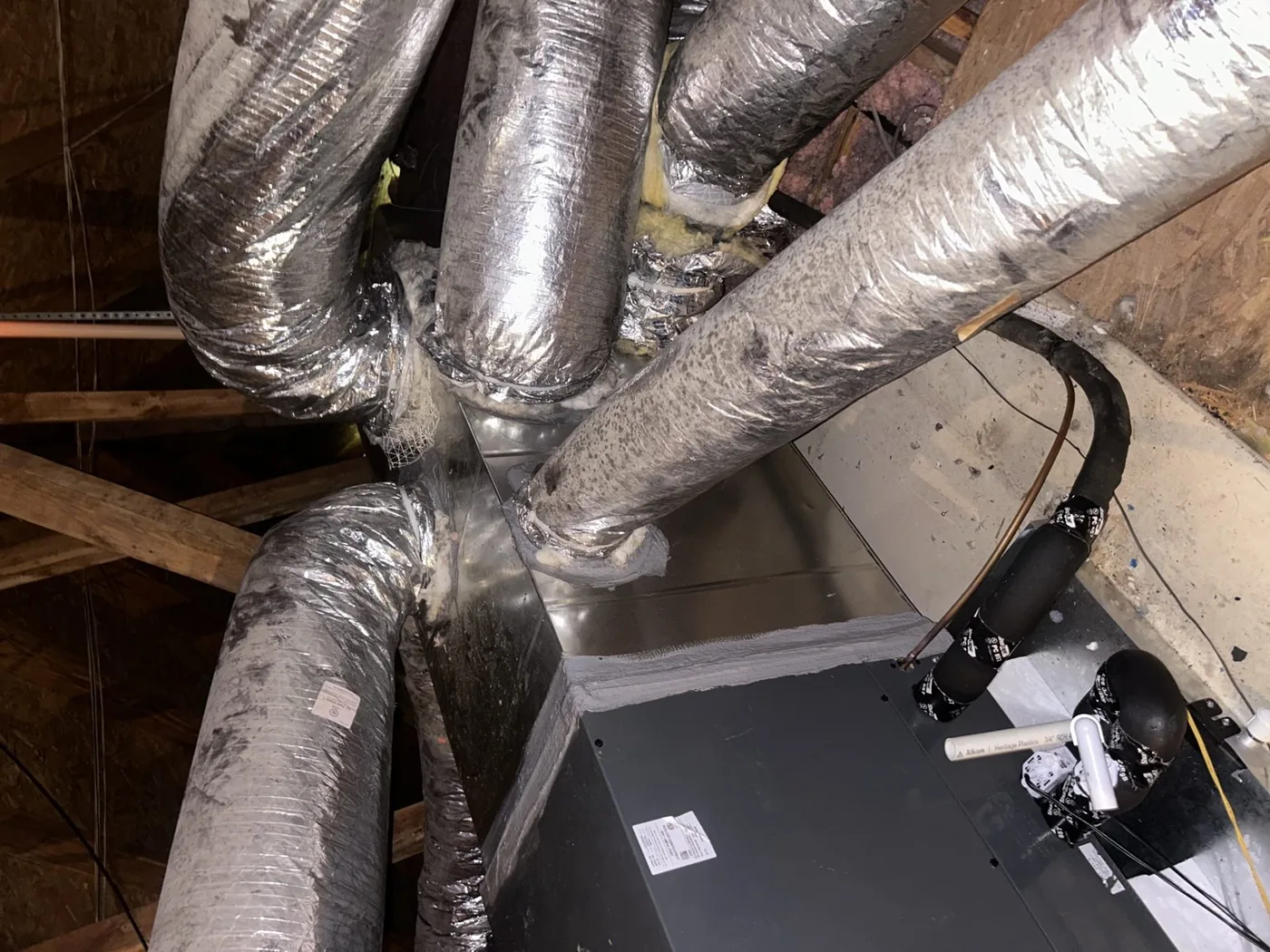
The upstairs system was 15 to 20 years old. The duct joints had been sealed with tape but no mastic, and the tape had dried out and started peeling. Cold air was leaking out of every joint into a hot attic. Where that cold air met the hot, humid attic air, water formed on the outside of the ducts, the same way a glass of iced tea sweats on the porch. That water had been dripping at the joints long enough for growth to start around them. The drain pan under the unit had standing water in it, and some of it may have been getting past the pan. The faint ceiling spots turned out to be old, from a roof leak years back that was fixed but never painted over. An overflowing pan is exactly how new ones start, though.
So the “drip” call was really three problems: leaky duct joints, a drain pan that wasn’t doing its job, and a system old enough that it was time for an honest repair-or-replace talk.
Why ducts sweat in a Louisiana attic
On a summer afternoon here, the attic can run well past the temperature outside, and the air up there is thick with moisture. Your A/C pushes air through those ducts at around 55 degrees. Any spot where that cold metal or cold air touches the hot attic air is a place for water to form.
A duct system that’s sealed and insulated keeps the two apart. It stops working when:
- Joints are taped instead of sealed with mastic. Tape looks fine on install day. In attic heat it dries out and lets go.
- Insulation is torn, crushed or missing. A section of bare duct or a split jacket sweats first.
- The system pulls in attic air. A leaky return pulls hot, wet attic air straight into the system and makes everything wetter.
- The drain can’t keep up. A clogged drain line, a missing trap or a rusted pan sends the water somewhere it shouldn’t go.
None of these show up from the hallway. You notice them as a drip, a ceiling spot, a musty smell when the system kicks on, or a house that never feels quite dry.
What’s at stake if you leave it
Water from a sweating duct doesn’t stop on its own. It soaks the insulation under it, which then holds water against the ceiling drywall. Over a summer that becomes a stain, then soft drywall, and sometimes mold growth on the back of the ceiling where you can’t see it. The leaking duct is also cooling your attic instead of your bedrooms, so the system runs longer and your power bill goes up.
The longer it runs, the more the fix moves from “seal and insulate the ducts” toward “replace the ducts, the insulation and some ceiling.”
How we handle it: three steps
1. Find where the water starts. We go up in the attic with the system running. We look at every joint, the insulation, the drain pan and the drain line, and we take photos of what we find. You see the same pictures we see.
2. Fix the cause, not just the stain. Depending on what we find, that means sealing joints with mastic, re-insulating or replacing damaged duct runs, clearing the drain and adding a proper trap, or replacing a rusted pan. If growth has spread past the duct joints into the insulation or drywall, we handle that too. We hold the license to do mold remediation in Louisiana, so you don’t have to bring in a second company and repeat the whole story. When a mold assessment is required, we order independent, disinterested third-party testing so the person doing the work isn’t the one grading it.
3. Show you it’s done. Photos before and after, the readings, and a plain-English summary of what we fixed and why.
On that New Orleans job, the homeowner wanted a straight answer on repair versus replace. With a 15 to 20 year old system and duct joints failing all over the attic, the honest answer was that patching would buy a summer, not years. They chose new Daikin equipment and all-new ductwork, sealed and insulated the right way.
Signs your ducts may be sweating
- Water spots or rings on the ceiling below the attic, often near a vent
- Water dripping from a supply vent or around the grille
- A musty smell when the A/C first turns on
- Rooms upstairs that never cool down like the rest of the house
- A power bill that keeps creeping up summer after summer
What life looks like after
When the ducts are sealed and insulated and the water drains where it should, the attic stops raining on your ceiling. The cold air you’re paying for reaches the rooms. The system runs less, the house feels drier, and you stop listening for drips at night.
Ready to find out what yours is doing?
Call (504) 702-1480. We answer day or night. A service visit is $99, and it’s waived if you go ahead with the repair. If the system is fine and just needs care, our $147 Clean & Check cleans the inside coil, flushes the drain line and trap, and comes with a photo report, and the $15.99 a month plan covers two Clean & Checks a year.
See our air quality and duct work, or check that we work in your town.
More from Field Notes: – Why your A/C runs all day and the house still feels sticky – That musty smell when the A/C kicks on, and what it usually means
Questions we get about sweating ducts
Is water dripping from my air vent an emergency? Usually not an emergency, but don’t wait on it. If water is coming through the vent or the ceiling, turn the system off, put a towel or a bucket down, and call. Water that keeps coming will soak the insulation and the ceiling.
Can I just wrap the ducts with more insulation? Not if the joints are leaking. Insulation over a leaking joint traps water against the duct. The joints get sealed first, then the insulation goes back on right.
Does a sweating duct mean I need a new A/C? No. Most sweating comes from the ducts, the insulation or the drain, and those can be fixed on their own. Replacement only comes up when the system itself is near the end of its life, and we’ll tell you honestly when that’s the case.
Will my ceiling need to be replaced? Only if the drywall has gone soft or has growth behind it. A small dry stain can often be sealed and painted once the water source is fixed.
Restoring what
was lost.
Your comfort, your air, your home, back the way it should be.
Got a question like this one?
Tell us what you’re seeing. We’ll call you back.