Mold in the upstairs closets: when the A/C is the cause
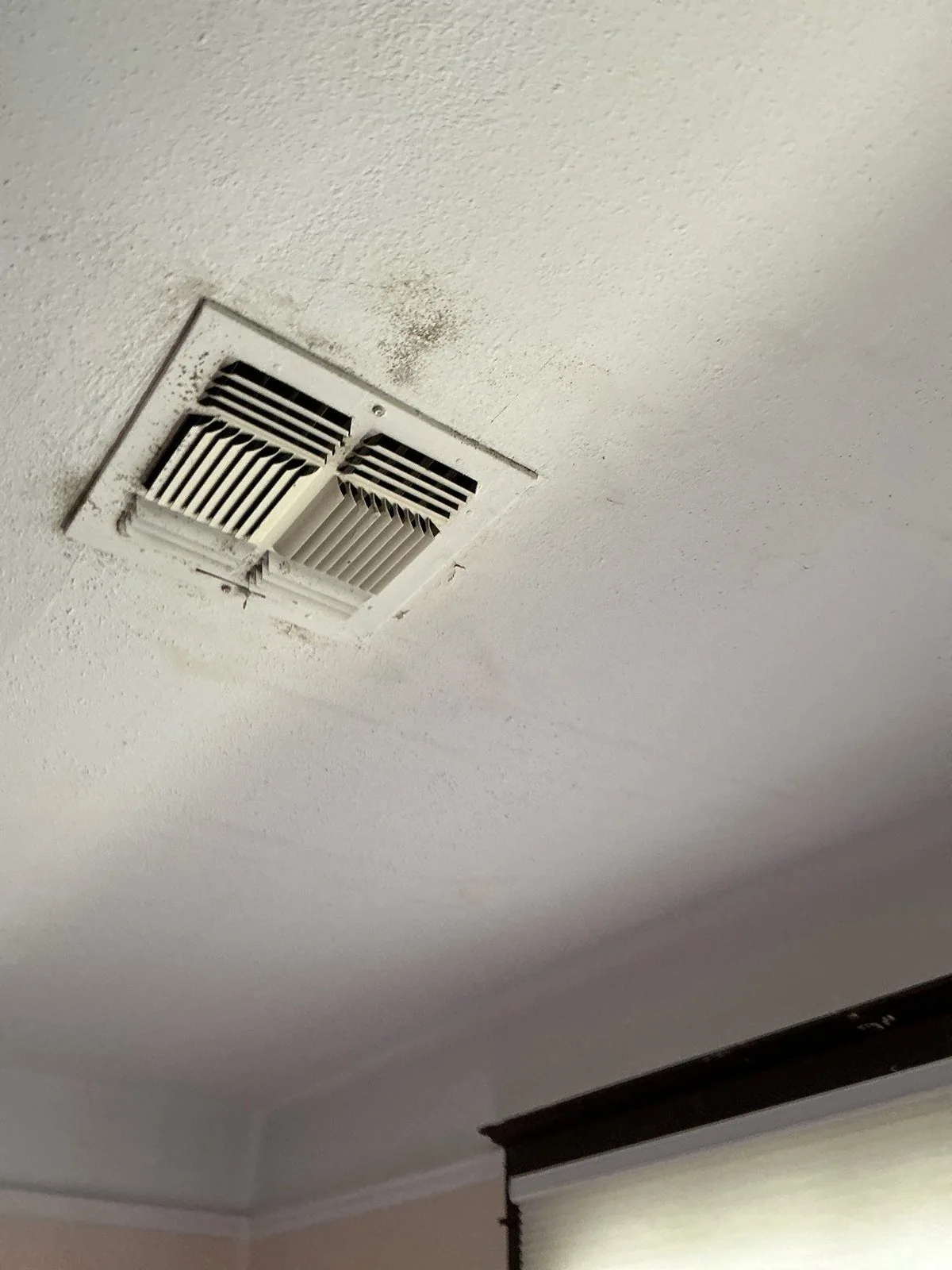
You pull a winter coat out of the upstairs closet and there it is. Gray-green spots on the back wall. A dusty, musty smell on the clothes. Maybe it’s on the ceiling of the closet too, or around the shelf where the shoes sit in the dark.
Your first thought is probably that the closet got wet somehow. Your second is wondering how far it goes.
A customer of ours went through exactly this. In a Google review, the customer wrote: “We discovered mold in our upstairs closets due to an aging HVAC system. They fixed the problem at its source, replaced our ducts, sealed all air leaks, cleaned and insulated our attic, and remediated the affected areas for mold.”
That’s the pattern we see, and here’s why.
Why upstairs closets go first
Closets are the perfect place for mold to start: – No air moving. Most closets don’t have a supply vent, and the door is usually shut. The rest of the house gets cooled and dried by the A/C. The closet doesn’t. – Right under the attic. Upstairs closets sit directly below the attic, where the ducts and often the air handler live. Whatever is going wrong up there, the closet ceiling feels it first. – Outside walls. Many closets sit against an outside wall, which can run cooler or warmer than the room depending on the season, and that’s where moisture collects. – Stuff packed in. Clothes, boxes and shoes hold moisture and block what little air there is.
How an aging A/C system causes it
When the system gets older, a few things tend to go wrong at once:
Leaky ducts. Duct joints loosen, tape peels, and cold air leaks into the attic. Where that cold air meets hot, humid attic air, ducts sweat and drip onto the insulation and the ceiling below.
Air leaks between the attic and the house. Gaps around the attic hatch, lights and the tops of walls let damp attic air into the house, often right into closets that don’t get much conditioned air.
A system that cools but doesn’t dry. An old or oversized system can keep the house cool without pulling enough water out of the air. Humid air settles in the places that get the least airflow. Closets are at the top of that list.
Drain and pan problems. A rusted pan or a clogged drain line in the attic can drip right over a closet ceiling.
What to look for
- Spots, fuzz or staining on closet walls, ceilings, shelves or baseboards
- A musty smell on clothes or shoes stored in the closet
- Clothes that feel damp or never quite fresh
- Water stains on the closet ceiling, especially under the air handler or the duct runs
- The same thing in more than one upstairs closet
What not to do
Don’t scrub it with bleach and call it done, and don’t paint over it. The surface may look clean for a while, but if the moisture source is still there, it comes back. And don’t start pulling down drywall yourself. Disturbing mold without containment can spread it to the rest of the house.
How we handle it: three steps
1. Find the source. We look at the closets, then go up into the attic to look at the ducts, the air handler, the drain, the insulation and the gaps between the attic and the house. We take moisture readings and photos so you can see what we see.
2. Fix the source, then the mold. That can mean replacing or sealing ducts, sealing the air leaks between the attic and the house, cleaning and insulating the attic, and fixing the drain. Then we do mold remediation in the affected closets with containment, removing what can’t be cleaned and cleaning what can. We’re licensed in Louisiana for both the A/C side and mold remediation, so it’s one crew and one plan.
3. Confirm it. When a mold assessment is required, we order independent, disinterested third-party testing before and after. The person who says it’s clear shouldn’t be the person who did the work.
What’s at stake if you only treat the closet
If you clean the closet and leave the leaky ducts, the damp attic and the tired system alone, you’ll likely be back in the same closet next summer. Fixing it at the source is what makes it stay fixed.
What life looks like after
The closets smell like closets. Clothes come out fresh. The upstairs cools evenly because the cold air is going into the rooms instead of the attic. And you know exactly what caused it and what was done.
Found mold in a closet?
Call (504) 702-1480. We answer day or night. Send us a photo of what you’re seeing if you can.
Learn about mold remediation and assessment, or see the towns we cover.
More from Field Notes: – That musty smell when the A/C kicks on, and what it usually means – Sweating ducts: what the water in your attic is telling you
Questions about mold in closets
Why does mold grow in closets and not the rest of the room? Closets usually have no air moving through them, sit under the attic, and are packed with things that hold moisture. They’re the last place the A/C reaches.
Can my A/C system cause mold in a closet? Yes. Leaky or sweating ducts in the attic, air leaks between the attic and the house, a drain problem, or a system that cools without drying can all do it.
Can I clean closet mold with bleach? Bleach on the surface doesn’t fix the moisture causing it, and scrubbing without containment can spread it. Find and fix the source first.
Who confirms the mold is gone? When a mold assessment is required, an independent, disinterested third party. We order that testing.
Restoring what
was lost.
Your comfort, your air, your home, back the way it should be.
Got a question like this one?
Tell us what you’re seeing. We’ll call you back.