The washing machine hose let go. What to do in the first hour
You hear it before you see it. A hiss from the laundry room, then water running where water shouldn’t run. By the time you get there, it’s across the floor and heading under the door. The rubber supply hose behind the washing machine has split, and it’s pushing out water at full house pressure.
Here’s what to do in the first hour, and what we found on a recent job where the homeowner did most of it right and still had water hiding in places nobody looked.
The first 10 minutes
1. Shut off the water. There are two valves on the wall behind the washer, one hot and one cold. Turn both clockwise until they stop. If you can’t reach them or they won’t turn, shut off the main water valve to the house.
2. Kill the power to anything sitting in water. Unplug the washer if you can reach the plug without standing in water. If you can’t, turn off that circuit at the breaker panel.
3. Take photos and video. Before you mop, record where the water is: the floor, the base of the walls, any rooms it reached. Photos taken in the first hour are the best record you’ll ever have of how far it went.
The next 50 minutes
- Get the standing water up. Towels, a wet vac, a squeegee toward a door. The faster it’s off the floor, the less soaks into the tile grout, the laminate seams and the bottom of the drywall.
- Move things off the wet floor. Rugs, boxes, furniture with fabric or wood legs. Put foil or plastic under furniture legs you can’t move.
- Open the room up. Run fans, open interior doors, and keep the A/C running to help pull moisture out of the air.
- Look past the laundry room. Check the rooms on the other side of every wall the laundry room touches: kitchens, hallways, closets.
- Call us. The sooner drying starts, the less has to be torn out.
What we found on a recent job
A homeowner in Metairie called us about three weeks after his washer supply hose failed. The hoses were the old rubber kind, likely original to the house. He’d had the plumbing fixed. The house is on a slab, and at first everyone thought the leak was under the slab. It wasn’t. It was the hose.
The laundry room sat in the corner of the house, with the kitchen next to it and the dining room in front. When we walked it, the water had gone a lot farther than the laundry room:
- It had run under the ceramic tile in the kitchen.
- It had gotten under the wood-laminate floor in a small sunroom and part of the dining room.
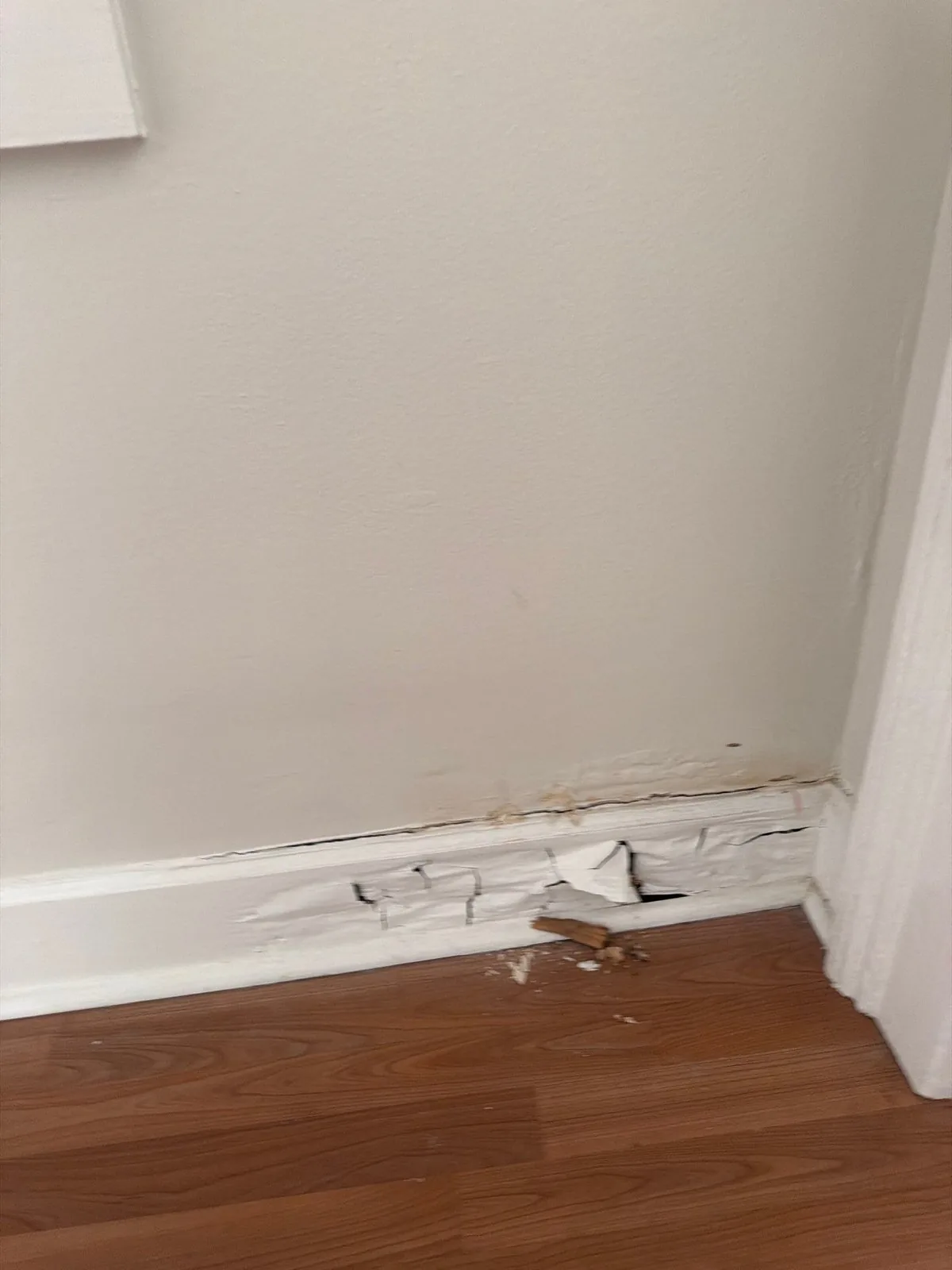
- It had wicked up into one or two walls. You could see the baseboards swelling, and the floor was swelling in spots.
That’s typical. Water on a slab doesn’t sit still. It runs along the concrete under tile and floating floors, and it climbs the bottom of drywall like a paper towel dipped in a glass. The surface can look dry in a day while the floor and the walls stay wet underneath for weeks.
He had already had three other contractors out, and none of them had sent him anything in writing. We sent him a written report the next morning: moisture readings at 12 spots, a floor plan of the affected rooms, photos, and a plain list of what we’d dry, what had to come out and why.
What’s at stake if it’s not dried right
When water stays trapped under flooring or inside walls, laminate cups and swells, baseboards and drywall soften, and the subfloor and wall cavities stay damp long enough for mold to start. In our climate that doesn’t take long. The longer the wait, the more of the floor and the walls have to come out instead of being dried in place.
How we handle it: three steps
1. Find where the water actually went. We use moisture meters and a thermal camera to map it, room by room, including under flooring and inside the base of walls. You get the map and the photos.
2. Dry what can be dried, remove what can’t. We set air movers and dehumidifiers and check the readings every day. Swollen laminate, soaked baseboards and the bottom of wet drywall usually come out. Tile on a slab can often stay. If mold has started, we handle mold remediation under our license.
3. Prove it’s dry, then put it back. We keep drying until the readings match the dry parts of the house, document that, and then rebuild what was removed.
What life looks like after
The floor lies flat again, the baseboards are tight to the wall, and the house doesn’t smell damp. You have a record of what happened, what was done and the readings that show it’s dry.
One more thing: change the hoses
If your washer still has the old black rubber hoses, swap them for braided stainless supply lines. It’s a cheap part and a short job, and it’s the difference between a drip you notice and a flood you don’t.
Call when the water’s off
Call (504) 702-1480. We answer day or night, and we can start drying the same day.
Learn about our water damage restoration, or see the towns we cover.
More from Field Notes: – Sweating ducts: what the water in your attic is telling you – That musty smell when the A/C kicks on, and what it usually means
Questions about a burst washer hose
How far can water travel from a laundry room on a slab? Farther than it looks. On the Metairie job above, it ran under the kitchen tile and under laminate in two other rooms. A moisture meter finds where it went.
Can I just run fans and let it dry? Fans dry the surface. Water trapped under tile, laminate and inside the base of walls needs dehumidifiers, air movers aimed at the right spots, and readings to prove it’s dry.
Does wet laminate flooring have to come out? Usually, if water got underneath and it’s swelling or cupping. We check it and tell you plainly what can stay.
How fast should drying start? As soon as the water is off. The longer it sits, the more has to be removed.
Restoring what
was lost.
Your comfort, your air, your home, back the way it should be.
Got a question like this one?
Tell us what you’re seeing. We’ll call you back.