Why your A/C runs all day and the house still feels sticky
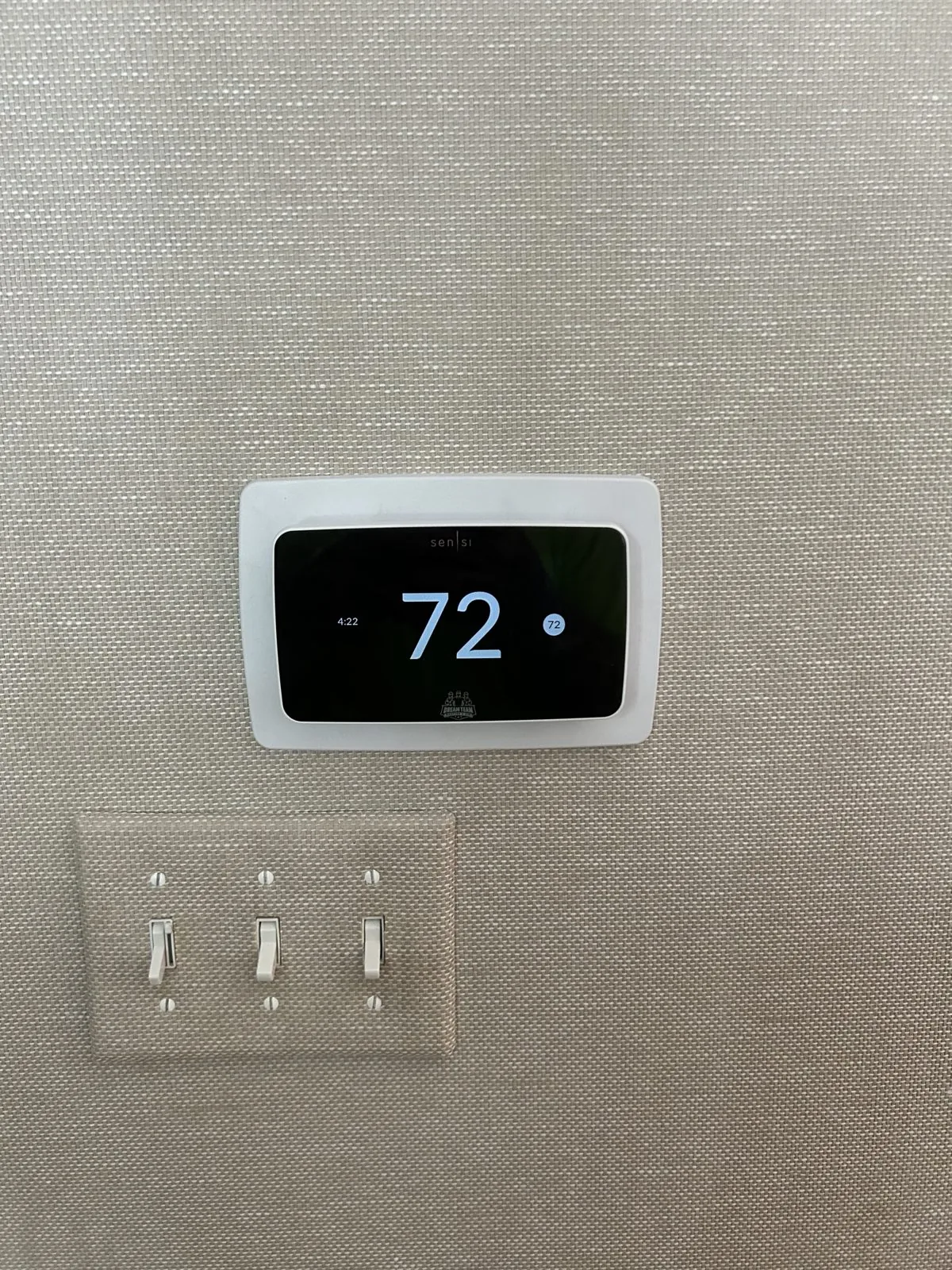
You set the thermostat to 72. The A/C has been running since lunch. And the house still feels like the inside of a gym bag. The sheets feel damp, the windows fog in the morning, and you keep checking the thermostat like it’s lying to you.
It isn’t lying. Your A/C has two jobs, and it’s only doing one of them.
This is the question we get more than any other from June to September, so here’s the straight answer.
Your A/C is supposed to dry the air, not just cool it
Cooling and drying happen at the same time, on the same coil. Warm, wet air from your house blows across the cold coil inside the system. The air cools down, and the water in it condenses on the coil, drips into a pan and runs out the drain line. That water is humidity leaving your house.
The catch is that drying takes time. The coil has to stay cold, and the air has to move across it slowly enough to give up its water. When something cuts that short, the air comes out cool but still wet. The thermostat is happy at 72 degrees. You aren’t.
Most people are comfortable when the humidity inside is somewhere around 40 to 50 percent. Once it climbs past about 60 percent, the house feels sticky at almost any temperature, and that’s also the range where mold starts to get comfortable on wood, drywall and the backs of closets.
The usual reasons, from most common down
1. The system is too big for the house. This surprises people, because bigger sounds better. An oversized system cools the house fast, the thermostat is satisfied in a few minutes, and it shuts off before the coil has had time to pull much water out. Then it starts again, and again. A 5-ton system on a house that needs 3 tons will do exactly this all summer. Often the last installer just matched the old unit’s size, or sized up “to be safe.”
2. Air is moving too fast across the coil. If the blower speed is set too high, the air rushes past the coil and doesn’t stay long enough to drop its water. It feels cool at the vent and damp in the room.
3. Leaky ducts or a leaky return. If the return side of the system has gaps in the attic, it’s pulling hot, wet attic air into the system along with your house air. Now the A/C is trying to dry the attic too. It can’t keep up.
4. The drain isn’t draining. If the drain line is clogged or was installed without a proper trap, the water the coil pulls out can sit in the pan or get pulled back into the airstream. In a quote we put together this fall, the photos showed a drain line jammed solid with no trap at all. Clearing a line like that and adding a trap is a small fix, and it matters.
5. A dirty coil or filter. A coil coated in dust can’t get cold enough to do its job well, and a clogged filter chokes the airflow. This is the cheapest one to fix and the one people put off the longest.
6. The house itself is pulling in wet air. Gaps around attic hatches, recessed lights, plumbing chases and old windows let outside air in all day. A powered attic fan can make it worse by pulling cooled air out of the house and replacing it with wet air from outside.
What it costs you to live with it
A sticky house isn’t just uncomfortable. The system runs longer than it should, so the power bill climbs. Moisture settles into closets, the backs of furniture, the attic and the ducts. That’s how a “the house feels a little damp” summer turns into a musty smell the next year, and sometimes into mold where you can’t see it.
How we find out which one is yours
1. We measure, we don’t guess. We check the humidity in the house, the temperature of the air going in and coming out, the airflow and the blower setting. We look at the coil, the filter, the drain line and the trap.
2. We check the size against the house. A load calculation tells us how much cooling your house actually needs based on its size, windows, insulation and air leaks. That shows whether the system you have is too big.
3. We fix the cause and show you. Sometimes that’s as simple as cleaning the coil, clearing the drain and turning the blower down. Sometimes it’s sealing the return and the ducts. If the system is badly oversized and near the end of its life, we’ll show you the numbers and give you a free replacement quote. When it’s time for new equipment, we install Daikin inverter systems. They run long and slow at low speed most of the day instead of blasting on and off, which means more air across the coil and more water out of your house. We’re a Daikin Premium Partner.
You get photos of what we found and a plain answer on what fixes it.
What it feels like when it’s right
When the system is sized for the house and the air moves at the right speed, it runs longer and quieter. The house feels cool at 74 instead of clammy at 70. The windows stop fogging. The closets stop smelling. And you stop arguing with the thermostat.
Call and tell us what it’s doing
Call (504) 702-1480. We answer day or night. A service visit is $99, and it’s waived if you go ahead with the repair. If the system just needs a cleaning, the $147 Clean & Check cleans the inside coil and flushes the drain line, and the $15.99 a month plan covers two of them a year.
Read more about A/C repair, or see the towns we cover.
More from Field Notes: – Sweating ducts: what the water in your attic is telling you – That musty smell when the A/C kicks on, and what it usually means
Questions about a sticky house
Should I just buy a dehumidifier? A portable one can help a single room, but it treats the symptom. If the A/C is oversized or the return is leaking, fix that first. Some houses do benefit from a whole-house dehumidifier ducted to the system, and we’ll tell you if yours is one of them.
Will turning the thermostat lower help? Usually not much. A lower setting makes the system run a little longer, but if it’s oversized or the airflow is off, the air still comes out wet.
Does running the fan on “On” instead of “Auto” help? In our climate it usually makes it worse. With the fan running nonstop, water sitting on the coil gets blown back into the house between cycles. Keep it on Auto.
How do I know if my system is too big? If it runs in short bursts of a few minutes, cools the house fast and the house still feels damp, that’s the classic sign. A load calculation confirms it.
Restoring what
was lost.
Your comfort, your air, your home, back the way it should be.
Got a question like this one?
Tell us what you’re seeing. We’ll call you back.