Water in the A/C closet or a clogged drain line: what to do tonight
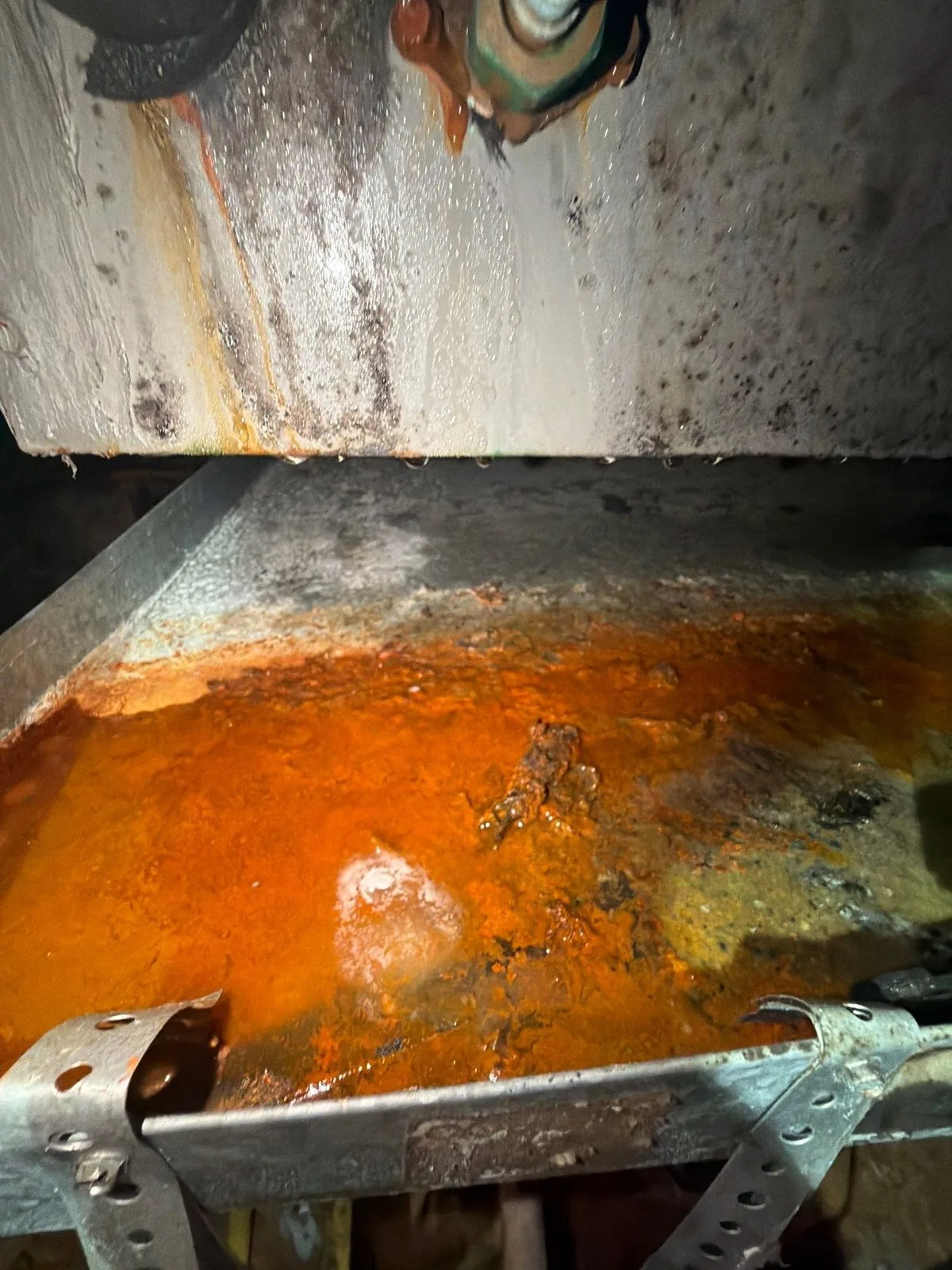
You walk past the hall closet where the A/C lives and your sock hits a wet carpet. Or there’s water dripping from a ceiling vent. Or the house just got warm and the A/C won’t come back on, even though the thermostat says it’s running.
It’s late, it’s hot, and you’re wondering if this can wait until morning.
Most of the time, this is a drain problem. It’s a call we get a lot in the summer, and there’s a lot you can do tonight to keep it from getting worse.
Why your A/C makes water at all
Your A/C cools the air by blowing it across a cold coil inside the system. Water in the air condenses on that coil, the same way a cold glass sweats, and drips into a pan underneath. From the pan, it runs out a small drain line, usually PVC, to the outside or into a drain.
On a humid Louisiana day, that’s a lot of water. When it can’t get out, it goes somewhere you don’t want it.
What usually goes wrong
- The drain line is clogged. Over time, slime, dust and algae build up in the line until it backs up. This is a very common cause.
- There’s no trap, or the trap is clogged. Many systems need a U-shaped trap in the drain line so water drains properly. A missing or blocked trap can keep water from leaving the pan.
- The pan is rusted or cracked. Older metal pans rust through and leak onto the floor or the ceiling below.
- The safety switch did its job. Many systems have a float switch that shuts the A/C off when the pan fills up, to keep it from overflowing. If your A/C suddenly stopped cooling and there’s water in the pan, that’s often why.
What to do tonight
1. Turn the A/C off at the thermostat. This stops it from making more water. If water is near electrical parts or outlets, turn off the breaker for the A/C too.
2. Get the water up. Towels, a wet vac, a mop. Pull wet carpet or rugs back from the closet if you can. If water is coming through a ceiling, put a bucket under it and move anything valuable out of the way.
3. Take photos. Of the water, the pan and the closet. It helps us, and it gives you a record.
4. Check the outside end of the drain line. Find the small pipe near the outdoor unit or the foundation. If it’s dripping when the A/C runs, the line is probably open. If it’s bone dry and there’s water in the pan, the line is likely clogged.
5. If you’re comfortable, try clearing it. A wet vac held tight over the outside end of the drain line can sometimes pull a clog out. Don’t use harsh chemicals or poke wire into the line, which can crack old PVC.
6. Don’t keep restarting it. If the float switch shut it off, the pan is full for a reason. Running it again just makes more water. Leave it off until the drain is clear.
If it’s very hot and you have someone in the house who can’t handle the heat, call us. We answer day or night.
What’s at stake if it keeps happening
One overflow is a mess. Repeated overflows soak the subfloor, the carpet pad, the drywall and the ceiling below. Water that sits in a dark A/C closet is also how mold gets started. A clogged drain line is a small, cheap fix compared to what it can damage.
How we fix it: three steps
1. Find out why it backed up. We check the drain line, the trap, the pan, the float switch and the coil, and take photos.
2. Fix it right. We clear and flush the drain line, add or fix the trap, replace a rusted pan, and make sure the safety switch is working. If water already got into the floor, the walls or the ceiling, we can dry it out too.
3. Keep it from coming back. Our $147 Clean & Check flushes the drain line and trap as part of the full list. The $15.99 a month plan covers two Clean & Checks a year, so the line gets flushed before the wet season and again before winter.
What life looks like after
The closet floor stays dry. The A/C runs through the summer without shutting itself off. And you stop checking the closet every time you walk by.
Water in the closet right now?
Call (504) 702-1480. We answer day or night. A service visit is $99, and it’s waived if you go ahead with the repair.
See A/C repair, or check the towns we cover.
More from Field Notes: – Sweating ducts: what the water in your attic is telling you – Why your A/C runs all day and the house still feels sticky
Questions about a clogged A/C drain
Why did my A/C stop working when there’s water in the pan? Many systems have a float switch that shuts the A/C off when the pan fills, to prevent an overflow. Clearing the drain usually lets it run again.
Can I pour bleach or vinegar down my A/C drain line? Ask us first. The right cleaner and where to pour it depend on your system, and harsh chemicals can damage some parts.
Is water in the A/C closet an emergency? Turn the system off and get the water up. If it’s spreading, coming through a ceiling, or near electrical parts, call us right away.
How do I keep the drain line from clogging? Have it flushed regularly. Our Clean & Check flushes the drain line and trap every visit.
Restoring what
was lost.
Your comfort, your air, your home, back the way it should be.
Got a question like this one?
Tell us what you’re seeing. We’ll call you back.