
Crew available now — ETA ≤ 60 min from dispatch · 24/7 · 504.702.1480
Response time measured from dispatch acknowledgment. ETA calculated from worst-case staging plus 10-minute buffer. Faster crew availability typical from Harahan HQ.
Mold doesn’t wait for your insurance to call back.
Backed by 20+ years of construction experience and IICRC AMRT, WRT, ASD, OCT, and FRST certifications, Xero DMG runs every mold remediation in Covington and St. Tammany Parish with industry standards, documented evidence, and maximum transparency on our end of the claim.
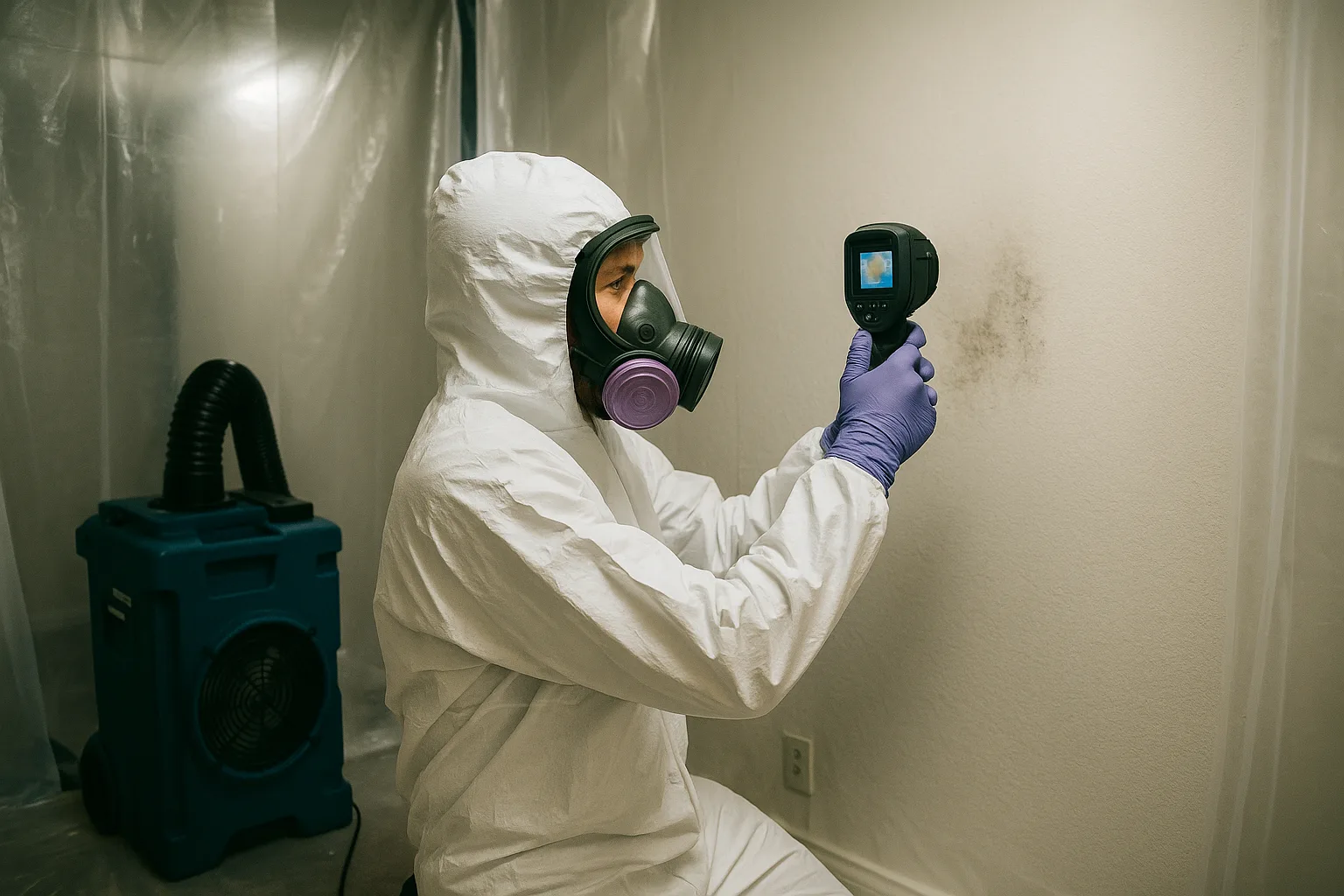
On the high ground of the Bogue Falaya.
Covington sits at the confluence of the Bogue Falaya and Tchefuncte rivers, on some of the highest natural ground in greater New Orleans — 15-50 feet above sea level on the pine ridges. That elevation reduces flood risk but does not reduce the humidity load: the river fog and seasonal rains keep crawlspaces and ground-floor framing in the wet end of the moisture range from May through October.
That’s why Covington mold problems demand a different approach. Cladosporium and Stachybotrys colonies can re-bloom within days when a non-IICRC contractor treats the visible spots without addressing the moisture source behind the drywall. Our remediation protocol — moisture mapping, source isolation, HEPA-negative-air containment, and post-remediation third-party clearance testing — is calibrated for St. Tammany Parish’s humidity load. We’re documentation heavy. Drying logs, moisture readings, third-party clearance when high-risk conditions are present — every page of evidence goes to both you and your adjuster, with a transparent read on time sensitivity and recommended next steps. You make one phone call. We handle the work and the paperwork.
The remediation no one will redo.
A St. Tammany Parish mold problem is a moisture problem with a microbial expression. Treat the colony without finding the source and the colony comes back. Our 20+ years of construction experience let us read a structure for hidden water — slow supply-line failures, hidden roof flashings, sub-slab wicking — that a remediation-only contractor will miss. We treat what we find AND what you don’t see, in maximum good-faith effort to reduce secondary damage down the road.
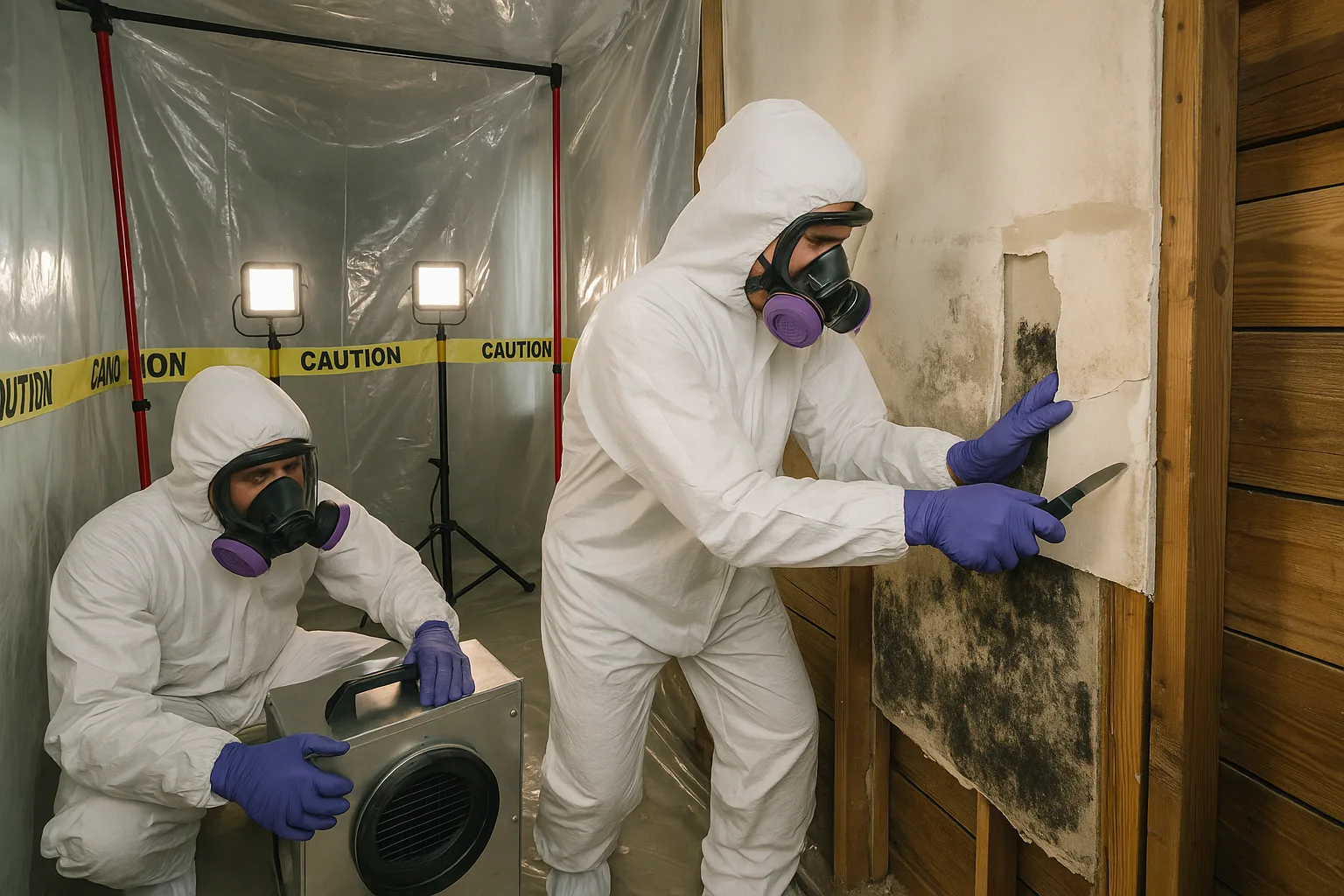
Documented from first reading to final clearance.
Daily moisture logs. Photographic documentation of every affected surface. Air-quality counts before and after each remediation pass. Independent clearance results delivered as a clean lab report. When your adjuster asks “why this scope, why this many days,” the answer is in the file.
Moisture Mapping
Thermal-imaging survey plus pinned moisture readings at 12-inch grid spacing. Source identified before any remediation begins. Findings documented for adjuster review.
Containment
HEPA-filtered negative-air pressure zones. Plastic sheeting sealed at every penetration with a decontamination chamber at the egress point.
Removal
Affected porous materials removed beyond visible damage to verified-dry substrate. Debris double-bagged, EPA-tracked, disposal documented.
HEPA Air Scrubbing
Multi-stage HEPA filtration on continuous duty cycles. Air-quality readings logged with each pass through the affected zone.
Antimicrobial Treatment
EPA-registered botanical or chemical antimicrobial applied per IICRC S520 protocol. Surface treatment matched to substrate type.
Third-Party Clearance
Independent indoor air quality test from a hygienist we don’t pay. Clearance lab report filed with you, your adjuster, and our records.
Five IICRC certifications. One residential contractor license. Twenty years of building.
Restoration is regulated by what the contractor knows, not what they claim. Most Louisiana restoration firms hold one or two IICRC certifications. Xero DMG runs five — at the technician level, on the same person on the job site — backed by a Louisiana Residential Contractor license and twenty years of construction work that came before any of the certifications.
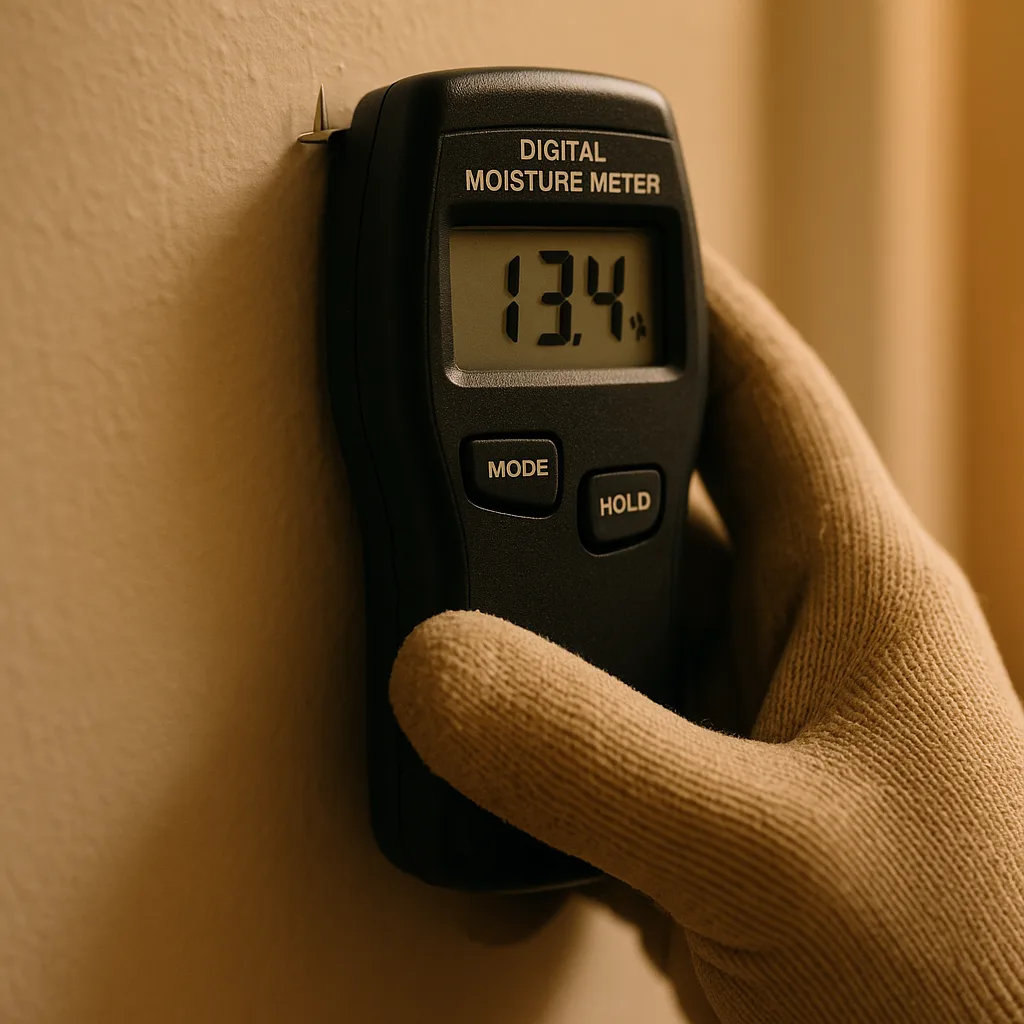
Backed by 20+ years of construction experience and a stack of IICRC certifications — WRT, ASD, AMRT, OCT, FRST — Xero DMG runs every loss with industry standards, documented evidence, and the maximum transparency we can control on our end of the claim.
What Covington clients ask first.
How fast can a crew reach Covington?
Active crews respond from our Metairie/Harahan facility. Published ETA is 60 minutes or less from dispatch acknowledgment, calculated as worst-case staging plus a 10-minute buffer. Faster response typical from HQ. Average response across St. Tammany Parish is 47 minutes. Active emergency? Call 504.702.1480 — dispatch is 24/7.
Will my insurance cover mold remediation?
Sudden & accidental water losses that produce mold are typically covered under HO-3 and HO-5 policies. Long-term seepage may be excluded. We bill your carrier directly, document IICRC S520 compliance, and handle supplement requests if the initial scope misses cavity drying. You don’t pay anything out of pocket if it’s covered.
Why does third-party clearance testing matter?
A remediation contractor “self-clearing” their own work is a regulated conflict of interest in most states. Independent clearance from a hygienist we don’t pay produces a defensible report — for resale, future insurance claims, and your own peace of mind. The hygienist invoice is a small fraction of the remediation cost.
What’s the warranty?
Our remediation work carries a written 12-month warranty against recurrence in the treated zone, contingent on the moisture source being addressed. If mold reappears in our treated area within 12 months and the moisture source has been corrected, we re-engage at no charge.
Are you licensed?
Yes. Licensed Mold Remediation (LA MR.12361), Licensed Commercial Mechanical Contractor (LA CL.08880), and Licensed Residential Contractor (LA RL.890700), IICRC AMRT (mold), WRT (water), ASD (drying), OCT (odor), FRST (fire/smoke) — all five certifications held at the technician level. HB-121 compliant, EPA Lead-Safe Certified Firm. Insurance and bond on file with St. Tammany Parish.
Don’t take our word for it. Verify.
lslbc.louisiana.gov → Contractor Search
lslbc.louisiana.gov → Contractor Search