Before the first cold snap: what to check on your gas furnace
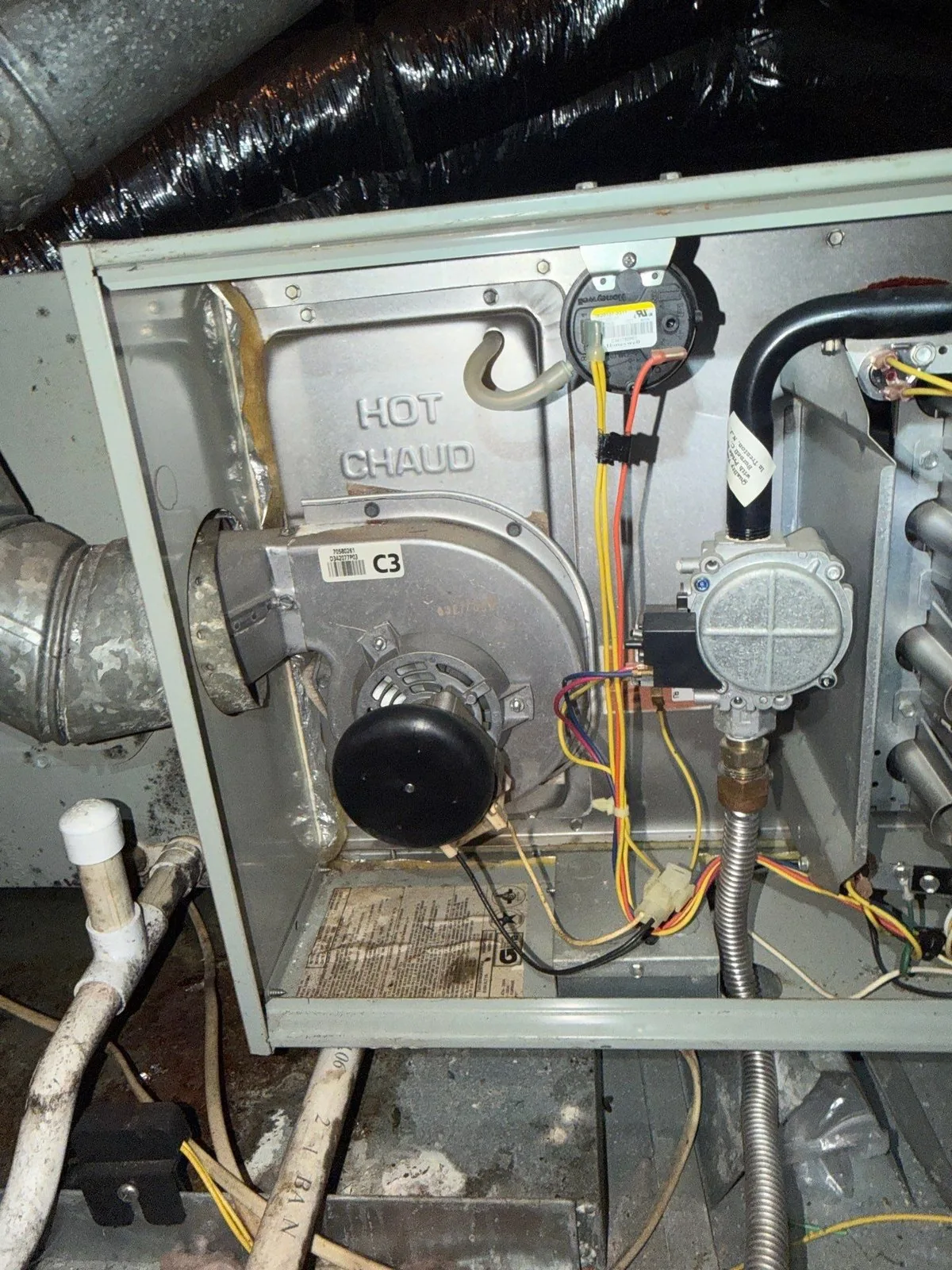
It’s the first cool night of the year. You flip the thermostat from Cool to Heat, the furnace kicks on for the first time since March, and the house fills with a smell like a hair dryer full of dust. Or nothing happens at all. The blower runs, the air stays cold, and the furnace clicks off.
In south Louisiana a furnace sits idle for eight or nine months, then gets asked to work on the coldest morning of the season. That’s why the first cold snap brings so many furnace calls. Most of what goes wrong is small, and a lot of it you can check yourself before the weather turns.
The burning-dust smell: usually normal, sometimes not
A furnace that hasn’t run since spring collects dust on the burners and the heat exchanger. The first few times it fires, that dust burns off. The smell is dry and dusty, and it should fade within the first hour or two of running.
What’s not normal: – A smell that keeps coming back day after day – A sharp electrical or plastic smell – Any smell of gas, like rotten eggs
If you smell gas, don’t flip switches or try to relight anything. Get everyone out of the house and call your gas company or 911 from outside.
It starts, then shuts off: the flame sensor
A no-heat call we hear a lot on the first cold day goes like this: the furnace clicks, the burners light for a few seconds, then they shut off. It tries again and does the same thing.
Very often that’s the flame sensor. It’s a small metal rod that sits in the burner flame and tells the furnace “yes, there’s a flame, keep the gas on.” After a summer of sitting, it gets a thin coat of dirt or oxidation and can’t read the flame anymore, so the furnace shuts the gas off to be safe. Cleaning or replacing it is a quick fix for a technician. It’s also a safety part, so if you’re not comfortable working inside a gas appliance, leave it to us.
The filter: the cheapest thing on the list
The same filter feeds your A/C and your furnace. If it’s been in since summer, it’s probably loaded. A clogged filter chokes the airflow, the furnace overheats, and a safety switch shuts the burners off. You’ll feel warm air for a few minutes, then cool air, over and over.
Change it before the first cold night. Write the date on the edge so you know next time.
Carbon monoxide alarms: check them now
A gas furnace burns fuel, and the exhaust has to leave the house through the vent pipe. A cracked heat exchanger, a loose vent connection or a blocked flue can let carbon monoxide into the house. You can’t see it or smell it.
- Have a working CO alarm on every floor, and one near the bedrooms.
- Press the test button on each one before you turn the heat on.
- Replace batteries, and replace any alarm past the date printed on the back.
If a CO alarm goes off, get everyone out to fresh air first, then call 911 or your gas company. Don’t go back in to look for the cause.
Other things you can look at before it’s cold
- Clear the area around the furnace. A furnace in a closet or the attic often ends up surrounded by stored boxes, paint cans or cleaning supplies. Give it room, and keep anything flammable away from it.
- Look at the vent pipe. On a high-efficiency furnace it’s usually white PVC; on an older one it’s metal. It should be connected and supported all the way out, with no gaps, sags or rust holes.
- Check the thermostat. Make sure it’s set to Heat, the batteries are fresh if it uses them, and the set temperature is above the room temperature.
- Listen when it starts. A normal start is a click, a soft whoosh as the burners light, then the blower. Loud bangs, rattles or squeals are worth a call.
When to shut it off and call us
Turn the furnace off at the thermostat and call if: – You smell gas (call the gas company from outside first) – A CO alarm goes off (get out first) – You see soot or scorch marks around the furnace or the vent – The burning smell doesn’t fade after the first day – It keeps shutting off, or runs but blows cold air – The breaker for the furnace trips
How we handle it: three steps
1. Find out what it’s doing. We look at the burners, the flame sensor, the igniter, the filter, the blower, the vent and the safety switches, and we take photos so you can see what we see.
2. Fix what’s wrong and make it safe. Many first-cold-snap calls turn out to be a flame sensor, a filter or a safety switch. If we find something more serious, like a cracked heat exchanger, we show you and explain your options plainly.
3. Get it ready for the season. We make sure it lights clean, vents properly and heats the house.
What winter looks like after
You flip it to Heat on the first cold morning and the house warms up. No mystery smell, no clicking on and off, and the CO alarms have fresh batteries. One less thing to think about.
Call before the cold, not during it
Call (504) 702-1480. We answer day or night. A service visit is $99, and it’s waived if you go ahead with the repair. Our $15.99 a month plan covers two Clean & Check visits a year, so the system gets looked at before summer and before winter.
See our A/C and heating service, or check the towns we cover.
More from Field Notes: – Why your A/C runs all day and the house still feels sticky – Sweating ducts: what the water in your attic is telling you
Questions about the first cold snap
Is it normal for my furnace to smell like burning the first time? Yes, for the first hour or two. That’s dust burning off the burners after a summer of sitting. If it keeps smelling, smells electrical, or smells like gas, shut it off and call.
Why does my furnace start and then shut off right away? Most often it’s a dirty flame sensor, a clogged filter or an overheating safety switch. A technician can find which one quickly.
Do I need a carbon monoxide alarm if I have a gas furnace? Yes. Put one on every floor and near the bedrooms, and test them before you turn the heat on.
Do you work on gas furnaces and heat pumps? Yes. We repair, maintain and install gas furnaces, heat pumps and ductless mini-splits.
Restoring what
was lost.
Your comfort, your air, your home, back the way it should be.
Got a question like this one?
Tell us what you’re seeing. We’ll call you back.