Repair or replace a 15 to 20 year old A/C: the honest math
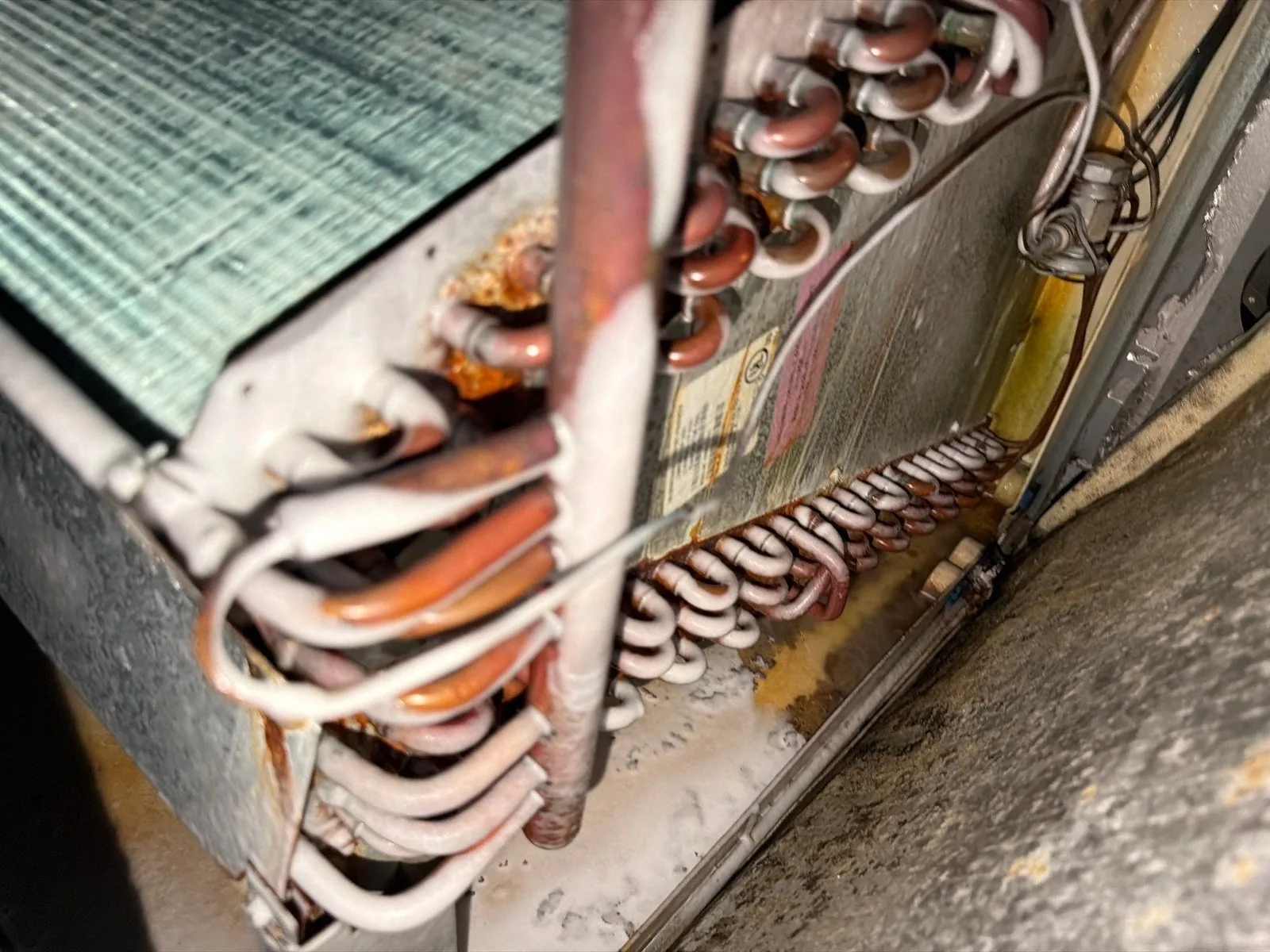
The A/C quit again. The tech says it’s fixable, and gives you a number. Then, almost as an aside: “You know, this system’s getting up there.” Now you’re trying to decide whether to put money into a 17-year-old unit or start pricing a new one, and everybody you ask seems to have a reason to push you one way.
A homeowner in an older New Orleans house asked us exactly that this fall. The upstairs system was 15 to 20 years old. What they told us was simple: we want an honest answer on repair versus replace, and we care more about doing it right than doing it cheap. Here’s how we think it through, and what we told them.
Start with what’s actually broken
Not every repair on an old system is a warning sign. Some failures are small, cheap parts that wear out on any system: a capacitor, a contactor, a clogged drain line, a dirty flame sensor on the furnace side. Fixing those on an older unit is often the right call.
Others are big ones: – The compressor. It’s the heart of the outdoor unit. On an old system, replacing it costs a large share of what new equipment would. – A refrigerant leak in the coil. Leaks in an old coil tend to come back somewhere else. – A cracked heat exchanger on the furnace side. That’s a safety problem, not just a repair.
The question isn’t “is it old?” It’s “what broke, and what’s likely to break next?”
The five things that actually decide it
1. Age. At 15 to 20 years, a system in our climate has worked hard. Louisiana A/Cs run most of the year, often for long hours.
2. The refrigerant. Many systems from the early 2000s and before use R-22. It’s no longer produced in the United States, so what’s left is expensive. A big refrigerant repair on an R-22 system is usually money better put toward a new one.
3. What the next few years probably look like. If the compressor, the coil and the blower are all original and tired, fixing one doesn’t fix the others.
4. The ducts. This one gets missed. On the New Orleans job, the duct joints had been sealed with tape instead of mastic, and the tape was peeling. Cold air was leaking into the attic and the joints were sweating. A new outdoor unit hooked to leaky ducts would have cooled the attic just as well as the old one did.
5. How the house feels. If some rooms never cool, the house feels sticky, or the bills keep climbing, a repair won’t change that. The system may be sized wrong for the house, or the ducts may be the real problem.
A simple way to weigh it
Ask three questions: – Is this repair a big part (compressor, coil, heat exchanger) or a small one? – Is the system older than about 15 years, or on R-22? – Is the house comfortable when it’s working?
If it’s a small part, the system is younger and the house is comfortable, repair it. If it’s a big part on an old R-22 system and the house was never comfortable anyway, replacing it usually makes more sense. Everything in between is a judgment call, and that’s where you want someone who’ll show you the numbers instead of a sales pitch.
What we told the New Orleans homeowner
With a 15 to 20 year old system, duct joints failing across the attic, and an owner who cared about doing it right, we laid out both options side by side. We were honest that patching would buy a summer, not years.
They chose new Daikin equipment and all-new ductwork, sealed and insulated the right way. The equipment was matched to the house with a load calculation, and the efficiency rating came straight off the AHRI matchup certificate, not off a sticker or a series name.
How we handle it: three steps
1. Find out what’s really wrong. A $99 service visit finds the problem, and it’s waived if you go ahead with the repair. We check the system, the refrigerant, the drain and the ducts, and we take photos.
2. Show you both options. If the system is near the end, we give you a free replacement quote with your Daikin options and the total price side by side, next to the cost of the repair. No high-pressure sales.
3. Do it right either way. If you repair, we fix it and tell you what to watch. If you replace, we size it with a load calculation, pull the permit, install it, check it at start-up and give you a project file.
What life looks like after
Either way, you stop wondering when it’ll quit next. If you repaired, you know what’s left in it. If you replaced, the house cools evenly, the air feels drier, and the system runs quietly for a long time.
Get a straight answer
Call (504) 702-1480. We answer day or night. Tell us how old the system is and what it’s doing.
See A/C replacement, or check the towns we cover.
More from Field Notes: – Why your A/C runs all day and the house still feels sticky – Sweating ducts: what the water in your attic is telling you
Questions about repair or replace
How long does an A/C last in Louisiana? It depends on how it was sized, installed and kept up. Ours run most of the year, so by 15 to 20 years most systems have earned an honest conversation about replacement.
My system uses R-22. Should I repair it? Small repairs, maybe. A big refrigerant repair on R-22 is usually better put toward a new system, because R-22 is no longer produced in the US.
Do I have to replace the ducts too? Not always. If they’re sealed, insulated and sized right, they can stay. If they’re leaking or sweating, new equipment on old ducts won’t give you what you’re paying for.
Is the replacement quote really free? Yes. You get your options and the total price in writing.
Restoring what
was lost.
Your comfort, your air, your home, back the way it should be.
Got a question like this one?
Tell us what you’re seeing. We’ll call you back.