
Crew available now — ETA ≤ 60 min from dispatch · 24/7 · 504.702.1480
Response time measured from dispatch acknowledgment. ETA calculated from worst-case staging plus 10-minute buffer. Faster crew availability typical from Harahan HQ.
Hurricane damage is three losses in one. Water. Wind. Time.
Backed by 20+ years of construction experience and IICRC WRT, ASD, AMRT, OCT, and FRST certifications, Xero DMG runs every hurricane loss with industry standards, documented evidence, and a tarp-board-extract-dry sequence that gets ahead of secondary damage.
Southwest Florida, with Charlotte County on the map.
Port Charlotte sits along Charlotte Harbor and the Peace River corridor in Charlotte County at 0 to +30 feet, a Southwest Florida coastal corridor with heavy hurricane exposure (Charley 2004, Ian 2022). Slab-on-grade dominates.
That’s why Port Charlotte hurricane losss demand a calibrated approach. Drying timelines, containment protocols, material disposal decisions, and clearance verification all change with local soil conditions, humidity bands, and structural patterns. Our protocol — IICRC-standard assessment, daily documented logs, photographic evidence, third-party clearance when high-risk conditions warrant — is calibrated for the Southwest Florida environment. We’re documentation heavy. Drying logs, moisture readings, soot maps, mold sample chain-of-custody — every page of evidence goes to both you and your adjuster, with a transparent read on time sensitivity and recommended next steps. You make one phone call. We handle the work and the paperwork.
Tarp first. Extract second. Dry third. Document everything.
A hurricane loss is three losses braided together — wind opens the building envelope, water pours in, time multiplies the damage every hour the structure stays wet. Most callbacks happen because the tarp went on late or the extraction phase got skipped. Our 20+ years of construction experience plus our IICRC WRT and AMRT certifications gives us the sequencing to get ahead of secondary mold growth and Category 3 storm-water contamination.
Documented from tarp to final clearance.
Daily field logs with date-stamped moisture readings, equipment counts, ambient psychrometrics, and tarp-and-board scope. Photographic documentation of every affected surface, before and after. Categorical assessment per IICRC S500 and S540 (storm-water specific), with the storm-event reference documented for adjuster comparison to neighboring losses.
Emergency Tarp & Board-Up
Roof openings tarped, wall openings boarded, site secured. Photographic documentation of every opening, with measurements, for the carrier.
Storm-Water Categorization
Per IICRC S500 and S540, storm water is treated as Category 3 — even when it looks clean. PPE, containment, and disposal decisions follow.
Bulk Water Extraction
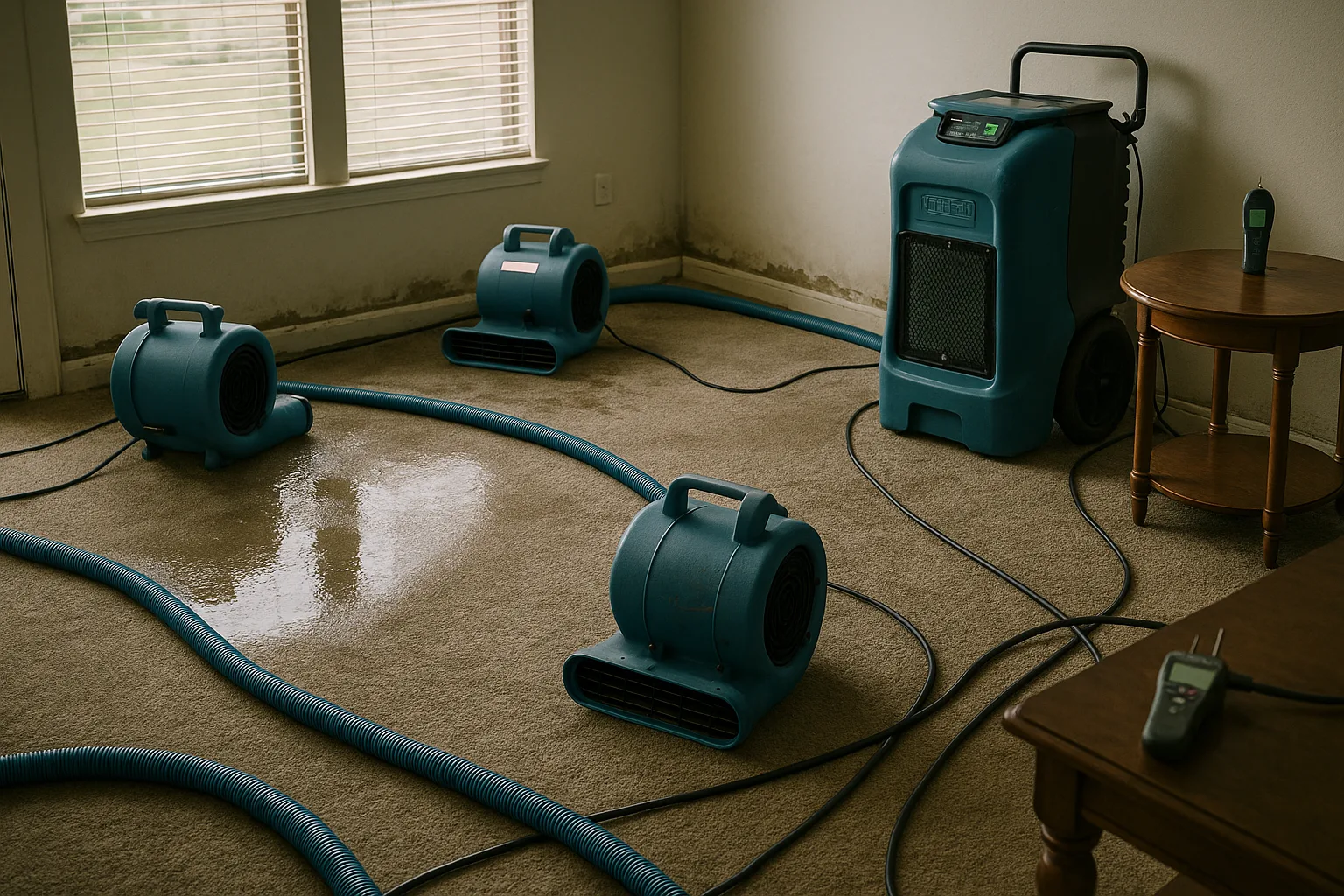
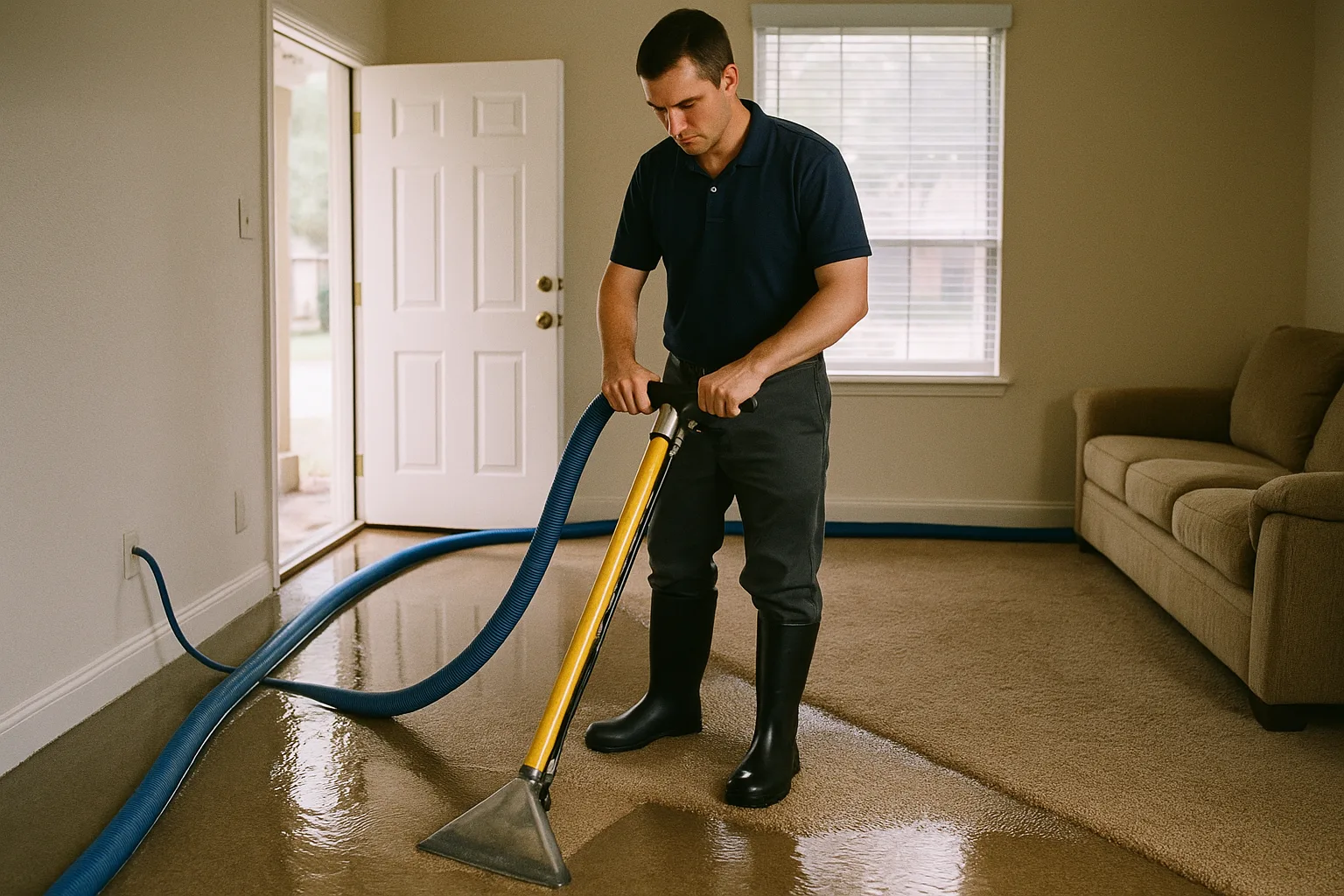
Truck-mounted and portable extraction. Standing water removed before any drying equipment is deployed.
Class & Scope Mapping
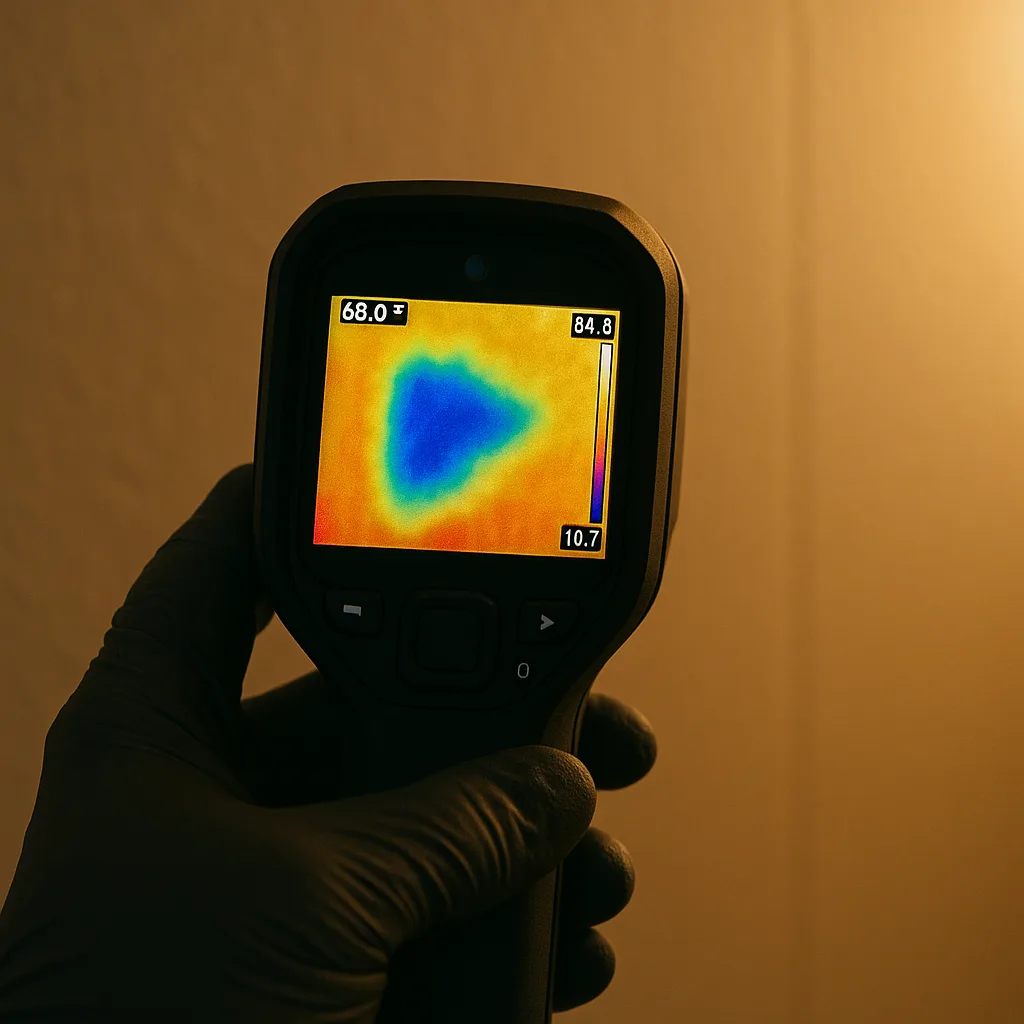
Thermal imaging and moisture mapping of affected materials, room by room. Drives equipment count and drying timeline.
Structural Drying & Material Removal
Affected drywall, insulation, and other porous materials removed (Category 3 storm water). Air movers and LGR dehumidifiers monitored daily.
Mold Prevention & Verification
Antimicrobial treatment to all dried cavities. Final dry-standard verification per IICRC S500. Clearance documentation to you, your adjuster, and our records.
Five IICRC certifications. One general contractor license. Twenty years of building.
Restoration is regulated by what the contractor knows, not what they claim. Most restoration firms in our service area hold one or two IICRC certifications. Xero DMG runs five — at the technician level, on the same person on the job site — backed by a Louisiana General Contractor license and twenty years of construction work that came before any of the certifications.
Backed by 20+ years of construction experience and a stack of IICRC certifications — WRT, ASD, AMRT, OCT, FRST — Xero DMG runs every hurricane loss with industry standards, documented evidence, and the maximum transparency we can control on our end of the claim.
What Port Charlotte clients ask first.
How fast can a crew reach Port Charlotte?
Active crews respond from our Metairie/Harahan facility. Published ETA is 60 minutes or less from dispatch acknowledgment, calculated as worst-case staging plus a 10-minute buffer. Faster response typical from HQ. Active emergency? Call 504.702.1480 — dispatch is 24/7.
Will my insurance cover hurricane damage?
Hurricane wind damage is covered under most homeowners policies (HO-3, HO-5). Storm-surge water damage typically requires separate flood insurance (NFIP). We work with both carriers in parallel, document IICRC S500/S540 compliance, and handle supplement requests as scope expands.
Why is storm water treated as Category 3?
Per IICRC S500 and S540, storm water is presumed contaminated — sewer overflow, agricultural runoff, dead-animal exposure. Cleaning protocols, PPE, and material-disposal decisions all follow Category 3 even when the water looks clean.
How fast can you respond after a major storm?
Pre-storm staging brings crews and equipment closer to the projected impact zone. Post-storm response is dictated by road access and curfew lifts. We update dispatch status hourly during active storm events; call 504.702.1480 for current ETA.
What’s the warranty?
Our hurricane mitigation work carries a written 12-month warranty against secondary damage from improper drying. If a wall cavity wasn’t dried to the IICRC S500 standard and produces mold within 12 months, we re-engage at no charge.